This talk will focus on the development of advanced battery materials for high-performance and sustainable energy storage systems, drawing on the core technologies of Hong Kong Applied Science and Technology Institute. It will highlight innovations in electrode materials, solid-state and functional electrolytes, separators, conductive additives, and protective coatings to improve energy density, cycle life, safety, and fast-charging capability. The discussion will also cover materials design strategies such as nanostructuring, surface/interface engineering, and polymer composite technologies, as well as scalable processing approaches for commercialization. Emphasis will be placed on enabling safer, longer lasting, and more sustainable batteries for electric mobility, consumer electronics, and energy storage applications.
Dr Tracy Liu is the Deputy Chief Technology Officer of ASTRI, where she assists Chief Technology Officer to shape the institute’s strategic research and development (R&D) agenda, with a primary focus on advanced materials. She leads cross-functional teams to ensure synergised execution across various technology domains.
Dr Liu previously served as Chief Technology Officer of the Nano and Advanced Materials Institute (NAMI). In this role, she led the institute’s R&D portfolio and strategic roadmap. Under her leadership, NAMI delivered impactful applied research, strengthened industry collaboration, and achieved significant milestones in innovation and technology advancement.
With over 20 years of R&D experience, Dr Liu specialises in the synthesis and characterisation of nanomaterials, with applications in batteries, solid-state lighting, and electronic devices. Before her tenure at NAMI, she held research positions at the National University of Singapore (NUS) and the Hong Kong University of Science and Technology (HKUST).
Dr Liu has published more than 30 research papers in leading scientific journals and contributed to over 30 granted patents. Her achievements have been recognised with several prestigious national- and ministerial-level awards, including the State Natural Science Award (Second Prize) from the Ministry of Science and Technology of China and the First Prize of the Natural Science Award from the Ministry of Education of China. She has also led teams in earning multiple international accolades, including the Edison Awards, R&D 100 Awards, CES Innovation Awards.
Dr Liu holds a Bachelor of Science and a Doctor of Philosophy in Materials Science from Beihang University (formerly Beijing University of Aeronautics and Astronautics).
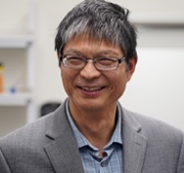
This keynote will discuss how energy storage systems are becoming a key enabler of grid-forming operation in modern power systems with high penetration of converter-based resources. The talk will clarify the concept of grid-forming control, explaining why it should not be seen simply as another converter control mode, but as a way of reproducing core grid-support functions that are increasingly needed in weak, inverter-dominated?systems. It will then examine the role of energy storage systems in providing fast grid support, such as inertia-like response, black-start capability, fault support, and operational flexibility. Some practical implementation aspects and key technical limitations regarding interaction between storage and active network control will be also presented. The keynote will also discuss emerging grid code requirements, international regulatory trends, and the growing need to define clear performance criteria for grid-forming storage-based systems in future resilient and converter-dominated grids.
Pedro Rodriguez holds M.Sc. and Ph.D. degrees in Electrical Engineering from the Technical University of Catalonia (UPC), Spain and has postdoctoral experience from Virginia Tech, US, Aalborg University, Denmark, and the MIT in Boston, US. He co-supervised the Vestas Power Program (2007-2011) and directed Modern Power Systems research at Abengoa (2011-2017) before heading Loyola.Tech at Loyola University, Spain (2017-2020). From 2021 to 2026, Dr. Rodriguez led the Intelligent Clean Energy Systems unit at the Luxembourg Institute of Science and Technology, where he currently acts as a Cross Functional Advisor. Dr. Rodriguez is also a part-time professor (since 1990) at the UPC and holds an affiliate professor position at the University of Luxembourg.
An IEEE Fellow and recipient of an Honoris Causa Doctorate from Aalborg University, Dr. Rodriguez was awarded the IEEE IES Bimal Bose Award for Industrial Electronics Applications in Energy Systems in 2025 and IEEE PELS Sustainable Energy Systems Technical Achievement Award in 2020. Currently, he chairs the European Technology and Innovation Platform - Smart Networks for Energy Transition – WG on energy Storage. Highly cited researcher and with 18 patents, he has contributed to over 50 industry and EU projects. His research focuses on operation and control of intelligent clean energy systems.
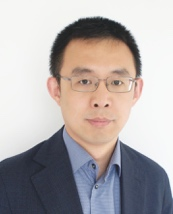
AI data centers are projected to consume hundreds of terawatt-hours annually by 2035, demanding power conversion technologies that are not only energy-efficient but also cost-effective, scalable, and reliable. It is estimated that the global market for power supplies, distribution, and management systems serving AI data centers and cloud computing is expected to reach approximately $145–150?billion. Conventional line-frequency transformers and multi-stage AC-DC architectures suffer from low efficiency, bulkiness, high cost, low reliability, and limited dynamic response. To support the rapid growth of AI workloads and comply with emerging energy and environmental standards, innovative power electronics solutions are urgently needed. This presentation explores the development of a novel megawatt-scale, medium-voltage (MV) power conversion system based on a Variable Air Gap Solid-State Transformer architecture. The approach aims to reduce energy loss, footprint, and cost while enabling flexible, modular deployment, and achieving more reliable operation in large-scale AI data centers.
Dr. Mi is a Distinguished Professor of Electrical and Computer Engineering at San Diego State University (SDSU), a Fellow of both IEEE and SAE, and the Director of Cali & Daniel Chang Center for Electric Drive Transportation at SDSU. He was previously a faculty member at the University of Michigan-Dearborn from 2001 to 2015, and an Electrical Engineer with General Electric from 2000 to 2001. He also served as the CTO of 1Power Solutions and EV Safe Charge. Dr. Mi received his Ph. D from the University of Toronto, Canada, in 2001. He is also the Co-Founder and CTO of Novos Power, a company focused on delivering power solutions for modern data centers with the highest efficiency, reliability, and lowest cost.
Dr. Mi was ranked the top 1% highly cited researchers in the world by Clarivate in 2025, among the top 179 researchers in engineering world-wide to receive that honor. Dr. Mi has published five books and 370 papers. He served as Editor-in-Chief, Area Editor, Guest Editor, and Associate Editor of multiple IEEE Transactions and international journals, as well as the General Chair of over ten IEEE international conferences. Dr. Mi has won numerous awards, including the “Distinguished Teaching Award” and “Distinguished Research Award” from the University of Michigan, IEEE Region 4 “Outstanding Engineer Award,” IEEE Southeastern Michigan Section “Outstanding Professional Award,” and SAE “Environmental Excellence in Transportation (E2T) Award.” He is the recipient of three Best Paper Awards from IEEE Transactions on Power Electronics and the ECCE Student Demonstration Award. In 2019, he received the Inaugural IEEE Power Electronics Emerging Technology Award. In 2022, he received the Albert W. Johnson Research Lectureship and was named the Distinguished Professor, the highest honor given to an SDSU faculty member, and only one award is given each year. In 2023, he received the IEEE PELS Vehicle and Transportation Systems Achievement Award, the IEEE Transactions on Industry Applications Best Paper Award, the SDSU Innovator of the Year Award. In 2024, he received the prestigious Alumni Distinguished Faculty Award from SDSU. Most recently, he received the Wang Family Excellence Award from the California State University System.
With the rapid proliferation of inverter-based renewables, DC transmission lines, energy storage systems, and large electronic loads, power-electronic-based power systems are emerging at unprecedented scale. Consequently, system stability is no longer dominated by electromechanical dynamics of synchronous machines, but increasingly by the interactions among fast, tightly controlled power converters. These interactions introduce new classes of oscillations, instability mechanisms, and system-wide vulnerabilities that challenge conventional stability theories, modeling approaches, and control paradigms developed for legacy power grids. This talk will first give an overview of emerging stability challenges in converter-dominated power systems, spanning sub-/super-synchronous stability, harmonic stability and transient stability. Analytical perspectives on the root causes of instability phenomena will then be shared. Recent advances in modeling, stability analysis, and robust control of grid converters will also be discussed. Finally, the talk will conclude with perspectives on future research directions toward stable and secure power-electronic-based power systems.
Xiongfei Wang is currently Xinghua Chair Professor at Tsinghua University, Beijing, China, and Visiting Professor at KTH Royal Institute of Technology, Stockholm, Sweden. He received the PhD degree from Aalborg University, Denmark, 2013, where he became Assistant Professor in 2014, Associate Professor in 2016, Professor and founding Leader of Electronic Power Grid (eGRID) Research Group in 2018. From 2022 to 2025, he was Professor with KTH Royal Institute of Technology, Stockholm, Sweden, and Parttime Professor at Aalborg University. His research interests include modeling and control of power electronic converters, stability and power quality of power-electronic-based power systems, grid-forming energy storage systems, and datacenter power systems.
Dr. Wang serves as the Editor-in-Chief of IEEE Transactions on Power Electronics, the Chair of IEEE International Roadmap of High-Power Electronics for Modern Energy Grids, and the Chair of IEEE Power Electronics Society Technical Committee on Electronic Power Grid Systems. He is IEEE Fellow and received 12 IEEE Prize Paper Awards, the 2018 Richard M. Bass Outstanding Young Power Electronics Engineer Award, the 2019 IEEE PELS Sustainable Energy Systems Technical Achievement Award, and the 2022 Isao Takahashi Power Electronics Award.
Prof. Kevin J. Chen received his B.S. degree in Electronics from Peking University, China and PhD degree in Physics from University of Maryland, College Park, USA. He has conducted research on high-speed compound semiconductor device technologies in NTT LSI Laboratories, Japan and Agilent Technologies, USA, before joining Hong Kong University of Science and Technology (HKUST) in 2000. He is currently a Chair Professor in the Department of Electronic and Computer Engineering. He is the director of Nanosystem Fabrication Facility (NFF) at HKUST. He is leading the Power Semiconductors and Applications Center (PowerSAC) in the third InnoHK Research Cluster. Prof. Chen is an IEEE Fellow, a JSAP (Japanese Society of Applied Physics Letters) Fellow International, and a Hong Kong RGC Senior Research Fellow. His research interests include wide-bandgap semiconductor devices for high-power, high-frequency, and harsh-environment applications.
The reliability of power electronic converters has become a practical concern across the electrical energy sector. Converters are now used in grid-scale storage, medium-voltage grid interfaces, electrified transport, and data center power supplies, where the cost of an unexpected failure is high, and reliability must be addressed at the design stage rather than settled by warranty. Energy storage systems present broader challenges, since their reliability and availability depend on the storage medium as well as the converter. Converter design and operation in turn shape the stresses to which the medium is subjected. This keynote reviews the concepts and methods developed for reliability design, testing, and condition monitoring, along with the underlying degradation and failure mechanisms. It then turns to recent progress, drawing on examples from current research, and ends with the scientific questions and engineering challenges that remain to be addressed.
Huai Wang is a Professor at the Department of Energy (AAU Energy), Aalborg University, Denmark, where he has worked since 2012 and has held his current position since 2019. He leads the Reliability of Power Electronic Converters (ReliaPEC) research group and chairs the Mission on Digital Transformation and AI at AAU Energy. His research focuses on efficient, reliable, and cognitive power electronic converters. He has given more than 100 invited talks and collaborates widely with universities and industry across the power electronics value chain. He received his B.E. from Huazhong University of Science and Technology (2007) and his Ph.D. from City University of Hong Kong (CityUHK, 2012), and has held visiting positions at ABB Corporate Research (2009), MIT (2012), and ETH Zurich (2013). He received the IEEE PELS Richard M. Bass Outstanding Young Power Electronics Engineer Award (2016) and the CityUHK Department of Electrical Engineering Young Alumni Award (2022), and was elected a member of the Danish Academy of Technical Sciences (2023).
Keynote Speakers:
 |
Grid-Forming Operation Enabled by Energy Storage
Pedro Rodriguez Dr.Eng.
Professor / IEEE Fellow / DL
Distinguished R&T Scientist
Luxembourg Institute of Science and Technology
Luxembourg
|
| |
|
 |
When AI Meets Energy: How a variable air gap solid state transformer can change the landscape of AI data center power supplies
Dr. Chris Mi, Fellow IEEE & SAE
Distinguished Professor, Electrical and Computer Engineering
Founder and CTO, Novos Power Inc.
Director, Caili & Daniel Chang Center for Electric Drive Transportation
San Diego State University
USA
|
| |
|
 |
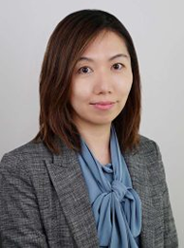
Rethinking Power System Stability in the Era of Power Electronics
Prof. Xiongfei Wang, Fellow IEEE
Xinghua Chair Professor
Tsinghua University
China
|
| |
|
 |
Wide-Bandgap Power Semiconductors for Hyperscale AI Data Centers
Kevin J. Chen, Fellow IEEE
Director of PowerSAC (InnoHK)
Chair Professor of Electronic and Computer Engineering
The Hong Kong University of Science and Technology
Hong Kong
|
| |
|
 |
Reliability of Power Electronic Converters for Energy Storage and Conversion: Recent Advances and Open Challenges
Huai Wang
Professor
Aalborg University
Denmark
|
| |
|
 |
Advanced Materials for High-Performance and Sustainable Energy Storage Systems
Dr. Tracy Liu
Deputy Chief Technology Officer
Applied Science and Technology Research Institute
Hong Kong
|